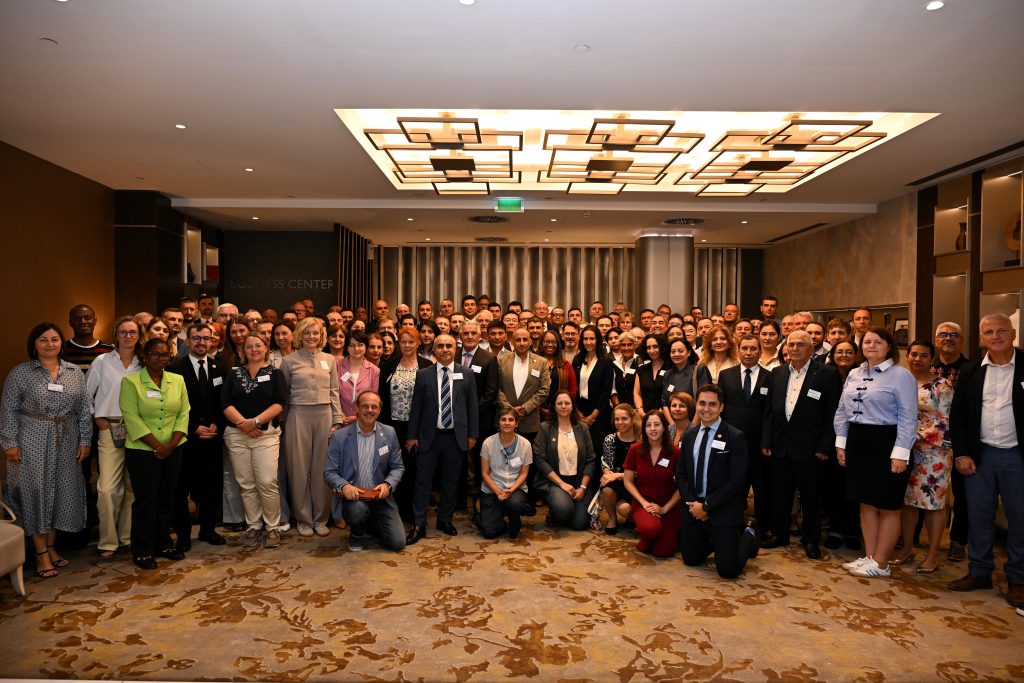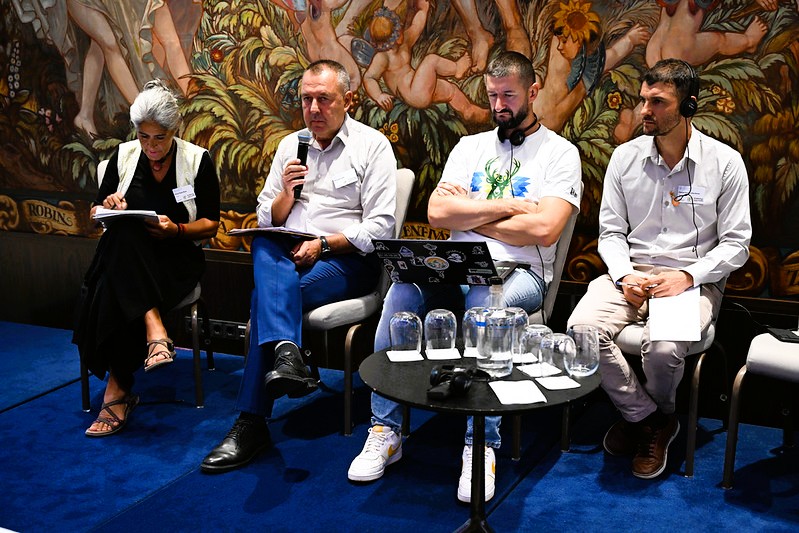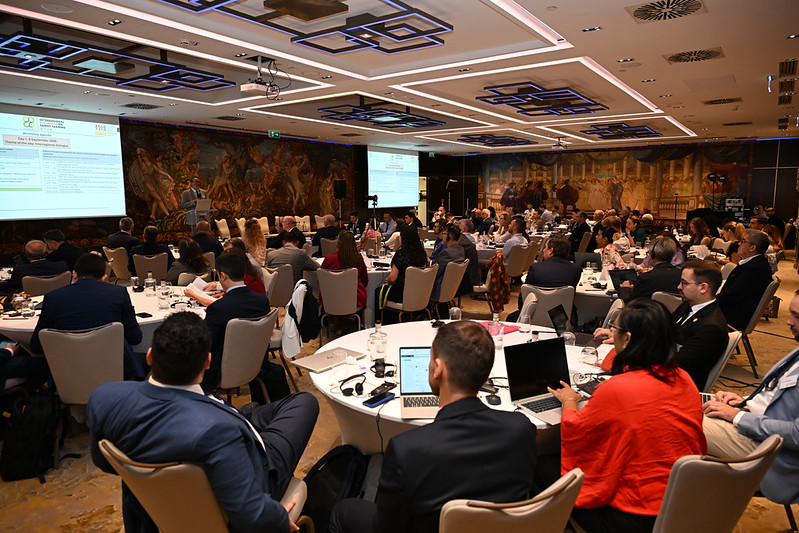


Budapest, 9 September 2026 – Xhevat Lushi, Country Director of CNVP Kosovo, participated as a panelist in Session 6, “𝐏𝐨𝐥𝐢𝐜𝐲 𝐨𝐛𝐣𝐞𝐜𝐭𝐢𝐯𝐞𝐬 𝐭𝐨 𝐛𝐞 𝐢𝐦𝐩𝐥𝐞𝐦𝐞𝐧𝐭𝐞𝐝 𝐭𝐡𝐫𝐨𝐮𝐠𝐡 𝐦𝐮𝐥𝐭𝐢-𝐩𝐮𝐫𝐩𝐨𝐬𝐞 𝐥𝐚𝐧𝐝 𝐜𝐨𝐧𝐬𝐨𝐥𝐢𝐝𝐚𝐭𝐢𝐨𝐧,” at the Joint 17th International LANDNET Workshop and Second Interregional Dialogue on Family Farming, organized by the Food and Agriculture Organization of the United Nations (FAO). He was joined at the event by CNVP Kosovo colleague, Hajrush Kurtaj.
The LANDNET Workshop brings together land governance and land tenure experts, government representatives, researchers and civil society from Europe, Central Asia and other regions. This year’s joint event focuses on land governance, family farming, access to land, land use and sustainable rural development, with participants from more than 50 countries.
During the session, Xhevat Lushi presented the situation of private forests in Kosovo, focusing on the challenges caused by fragmented forest ownership. Small and dispersed forest parcels make access more difficult, increase the cost of forest operations and make sustainable forest management and investment more challenging for individual forest owners.
Mr. Lushi highlighted that better land use and governance could help address some of these challenges by supporting improved access, cooperation among forest owners, joint planning and sustainable management, while respecting property rights and ensuring the active participation of landowners.
He also emphasized the close connection between forests, farming and rural livelihoods in Kosovo. Many rural families depend on both agricultural land and forests for food, fuelwood, non-wood forest products and income. A more integrated approach to land use and governance could therefore help reduce fragmentation, improve access and support more sustainable management of both agricultural and forest resources.