

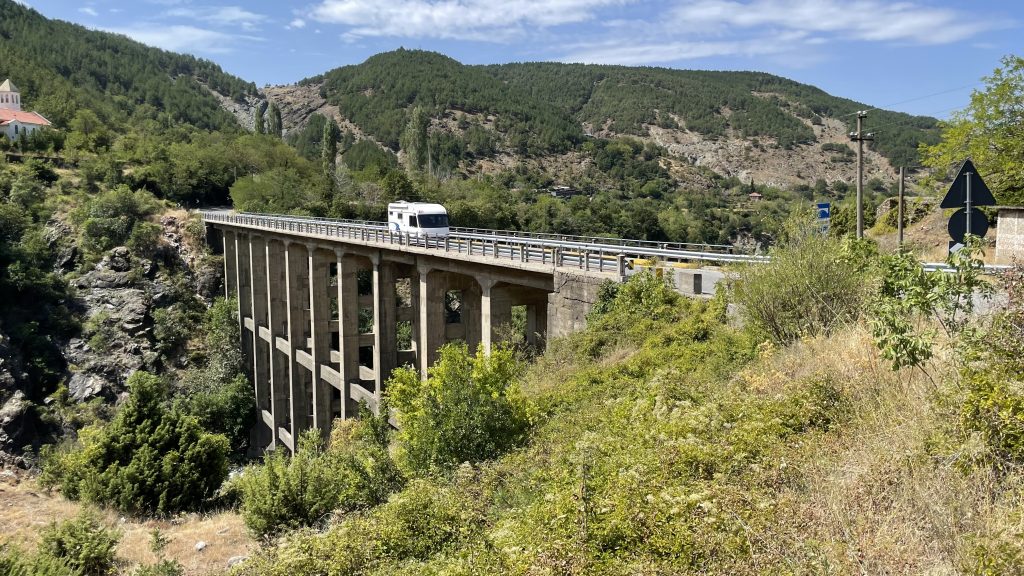
CNVP Albania turns restored land into a destination for hikers and a source of opportunity for local communities
KORTHPULË, PUKË: Where eroded slopes once threatened to wash away the soil, a young forest is now taking root, and visitors can walk right through it. Through the “Integrated Forest Management along the Drin River Basin” project, CNVP Albania has helped restore degraded land in Korthpulë and has now linked it to a new 6-kilometer hiking trail connecting Korthpulë and Gomsiqe.
Healing the land, improving lives
To halt soil erosion in Korthpulë, CNVP Albania built double-wooden fences and dry stone and concrete check dams. The measures were combined with afforestation using native species.
The goal went beyond rehabilitating damaged land. The interventions were designed to improve living conditions for residents and to give local stakeholders lasting benefits after the project ends, through better management of natural resources that complies with environmental and climate requirements.
Less erosion means land can recover, vegetation can return, and residents can once again cultivate it. The new forest, planted with native species, is expected to bring the community a wide range of benefits:
- protection of the soil from further erosion;
- better management of ground and surface water;
- increased biomass production;
- fruit and gardening materials for local residents;
- timber and fruit production;
- flowers to support bees;
- shelter and food for wild animals.
Jobs and income close to home
Local government and community representatives view the investment as a real opportunity to create jobs and raise incomes, both from the work completed so far and from the benefits still to come.
For them, the project offers a concrete example of how employment and income can be generated within the country, so that the local workforce is not forced to seek a future abroad.
From restoration to trail
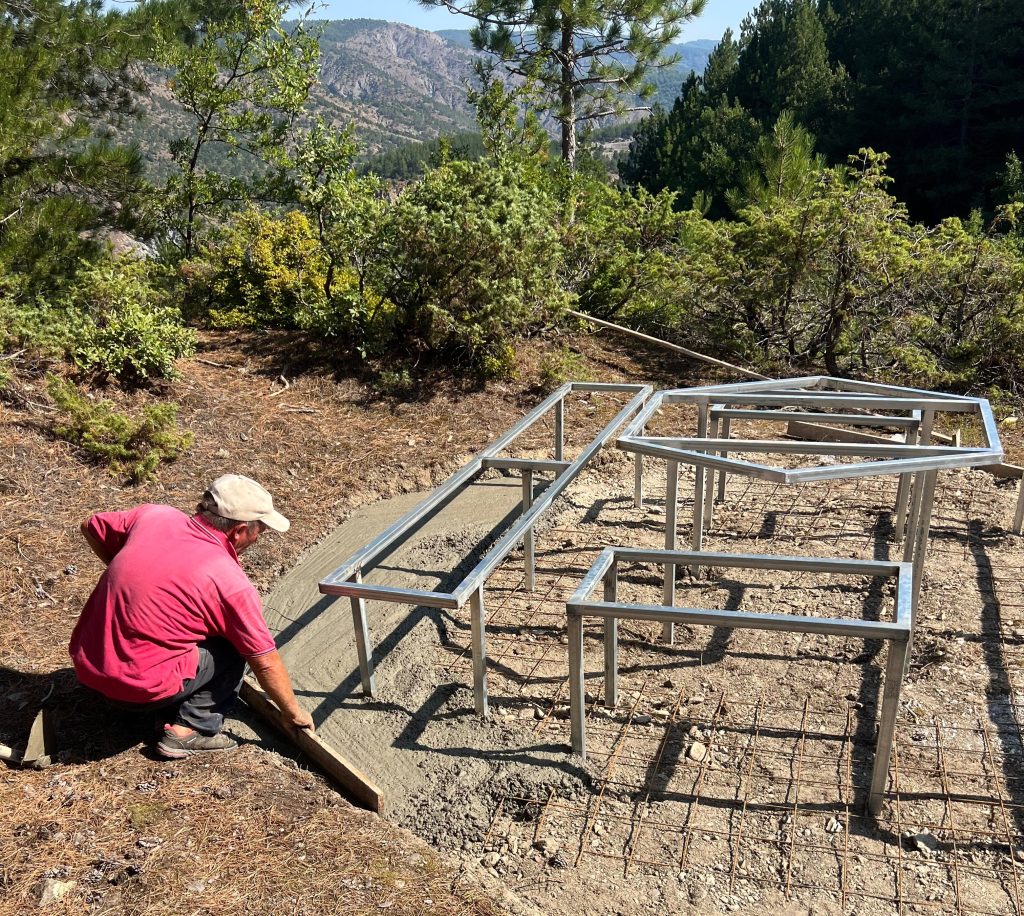
“Good work deserves to be shared with as many people as possible.” That conviction led CNVP to include the regenerated areas in a trail connecting them to the national road to Pukë, making the project’s results visible and accessible to everyone.
What awaits visitors
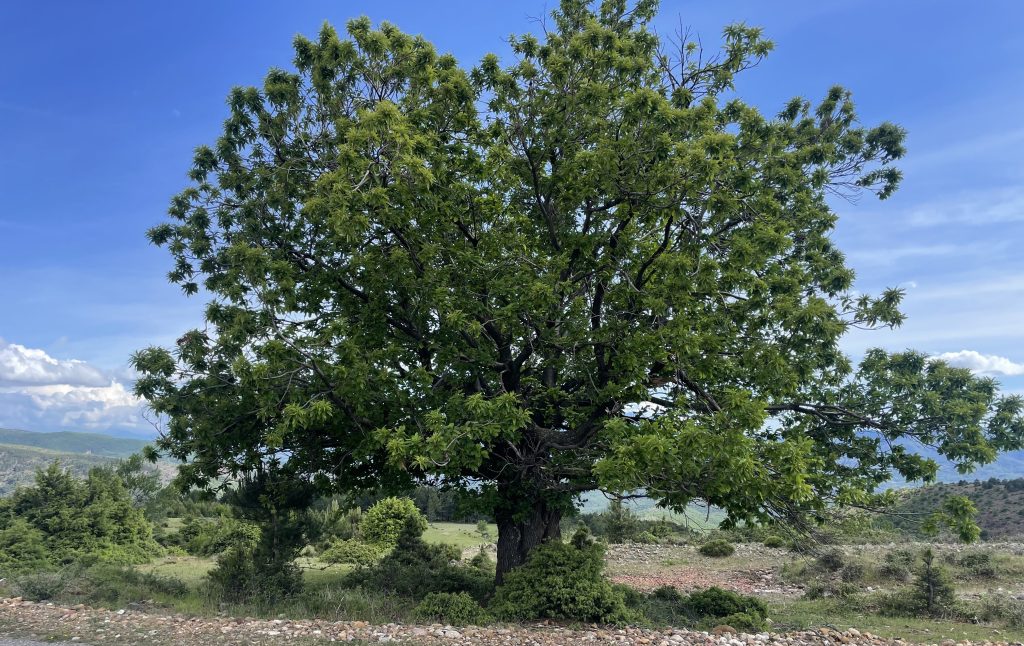
The Korthpulë–Gomsiqe trail runs for 6 kilometers, with two short detours: one to a centuries-old chestnut tree and another to the Natural Monument “Bungat e Varrezave Korthpul.” Its highest point reaches 650 meters above sea level, and its lowest sits at 333 meters.
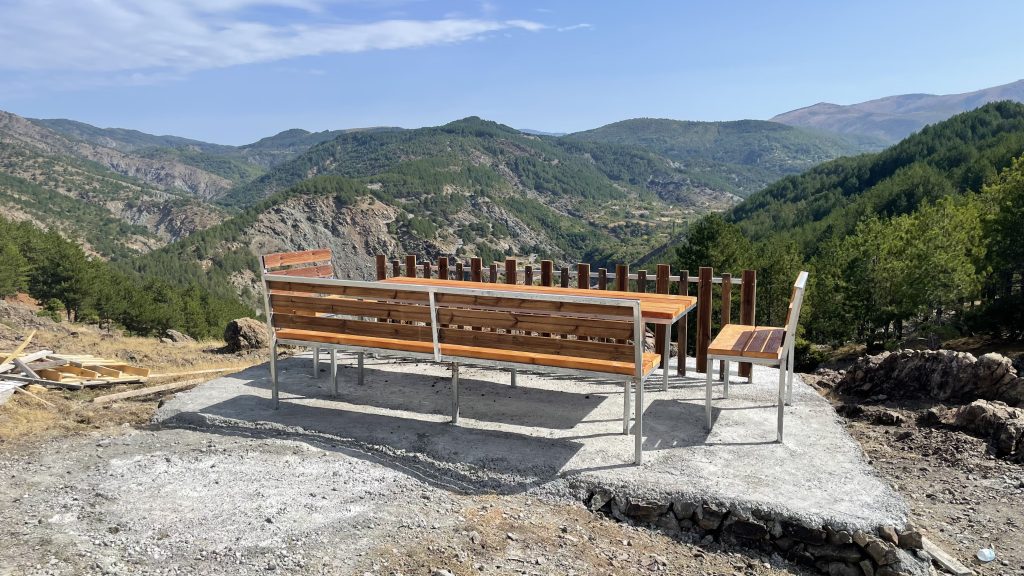
The route rewards walkers with sweeping views, resting benches and info-orienting road signs. The slopes of Mount Tërbun give way to rolling hills and winding valleys that stretch toward the point where the Buna River meets the Adriatic Sea. Visitors will find natural beauty, tranquility, and clean air.
Along the way, the area offers several sites of biological, historical, and cultural interest:
- the Natural Monument “Bungat e Varrezave Korthpul”;
- the Church of Shën Gjini;
- a kaolin extraction site, discovered by the Italians in 1939–43;
- Mount Tërbun, about 10 kilometers away;
- the regenerated area itself, restored through afforestation and integrated forest management (IFM) practices.
About the project
The “Integrated Forest Management along the Drin River Basin” project is implemented by CNVP Foundation in Albania, Kosovo, North Macedonia, and Montenegro, in partnership with the Austrian NGO, ICEP – Association for Global Development. It is funded by the Austrian Development Agency (ADA) under the “International Partnerships Austria” program.