

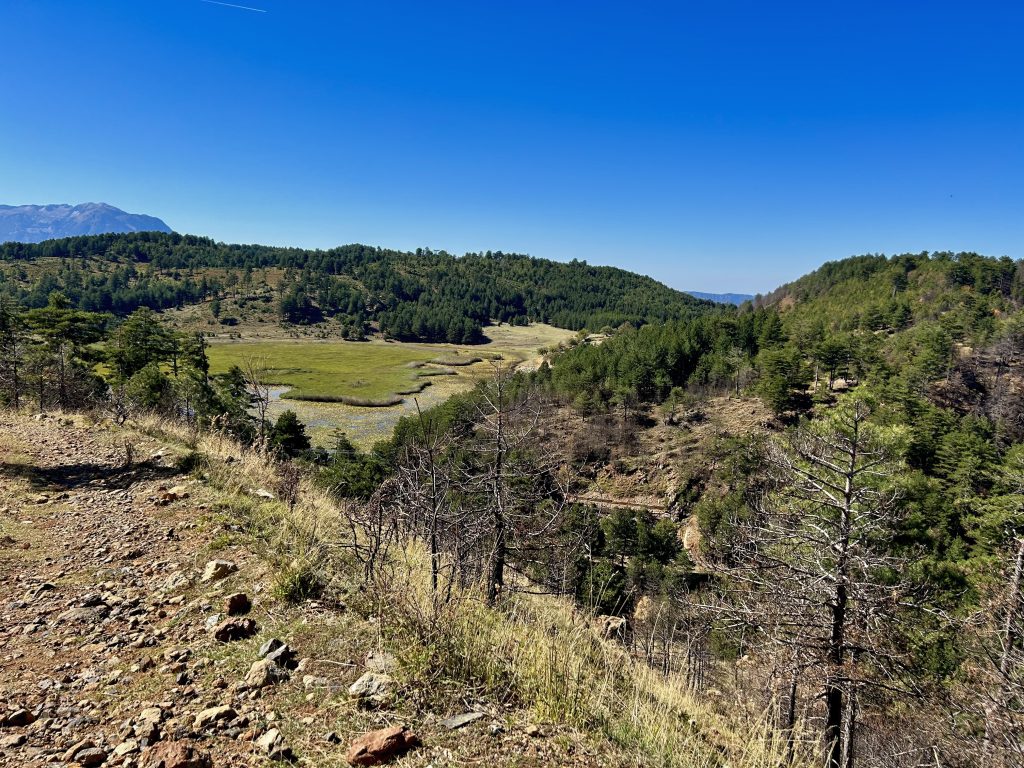
CNVP Albania and Gramsh Municipality completed a late-September field check on 10,000 newly planted saplings following an exceptionally hot and dry summer.
Gramsh, Albania — Planting trees is only the beginning of a forest restoration project. The true test comes in the months that follow, as young saplings face their first harsh seasonal conditions in the wild.
At the end of September, CNVP Albania, together with representatives from Gramsh Municipality, returned to the Dushku Lake site to check on the progress of 10,000 black pine saplings planted earlier this year. The project, supported by Raiffeisen Invest, aims to restore degraded forest land in the region.
To get an accurate picture of how the young trees were holding up, the team established several sample plots across the area to verify survival rates.
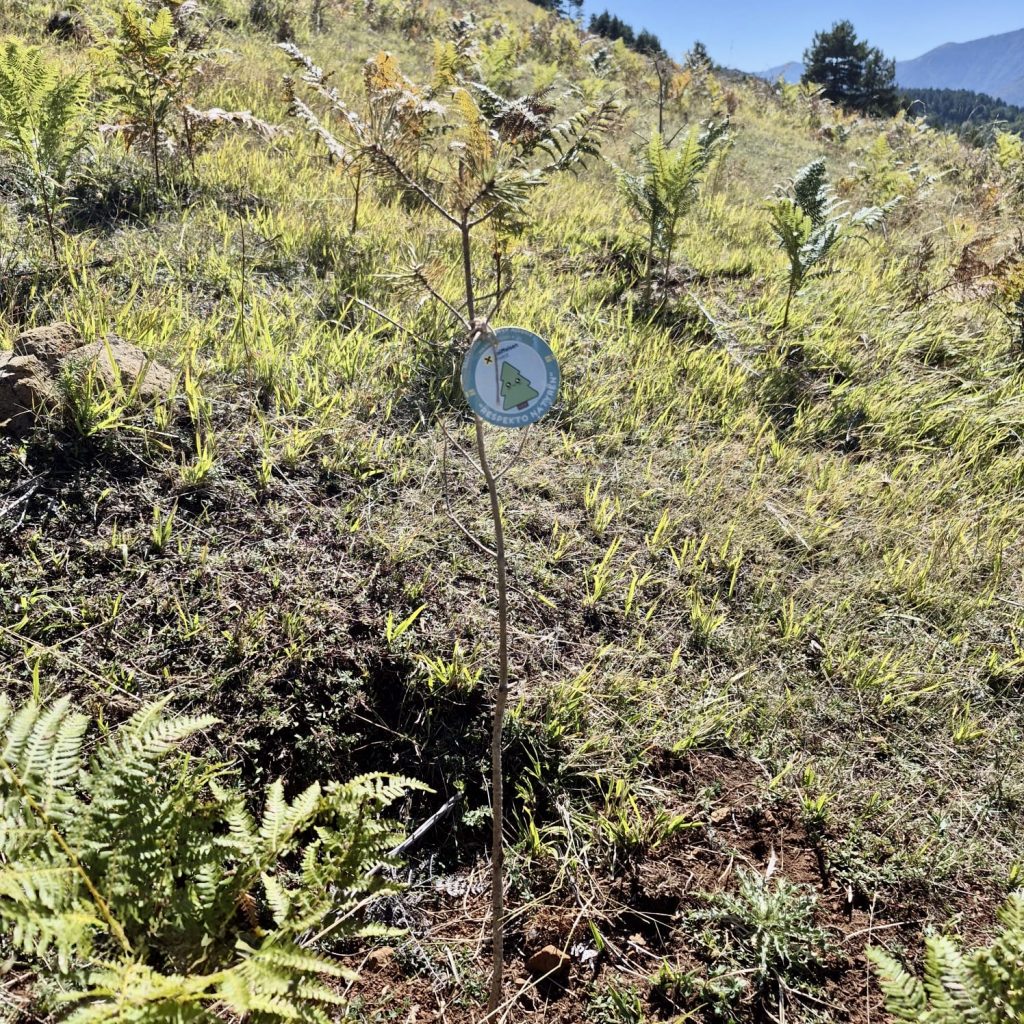
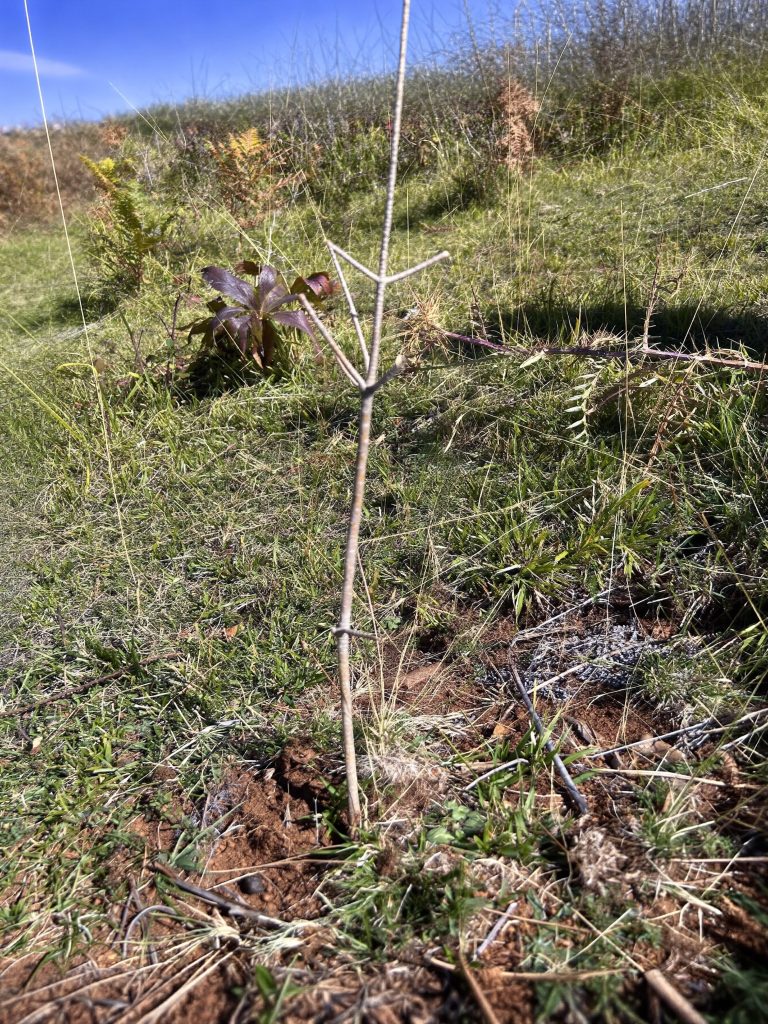
The assessment showed that around 70% of the saplings are in good condition, meaning roughly 7,000 black pines have successfully taken root. About 3,000 saplings were lost due to the prolonged drought that stretched from June through September, combined with record-high summer temperatures.
Given these extreme heat conditions, forestry experts consider a 70% survival rate a very encouraging result.
Next steps for Dushku Lake
Monitoring isn’t just about taking notes; it’s about planning the next steps. Rather than leaving the empty spots behind, CNVP Albania and Gramsh Municipality are already preparing to replace the dried-up saplings in the upcoming planting phase.
Restoring five hectares of fire-affected land takes time, continuous care, and strong local cooperation. Seeing 7,000 young trees green and thriving after such a challenging summer gives the team a solid foundation to build on as work continues at Dushku Lake.
This forest restoration initiative is implemented by CNVP Albania in partnership with Gramsh Municipality and with the generous support of Raiffeisen Invest.