
News
Improving Afforestation Practices to Combat Erosion in the Drin River Basin
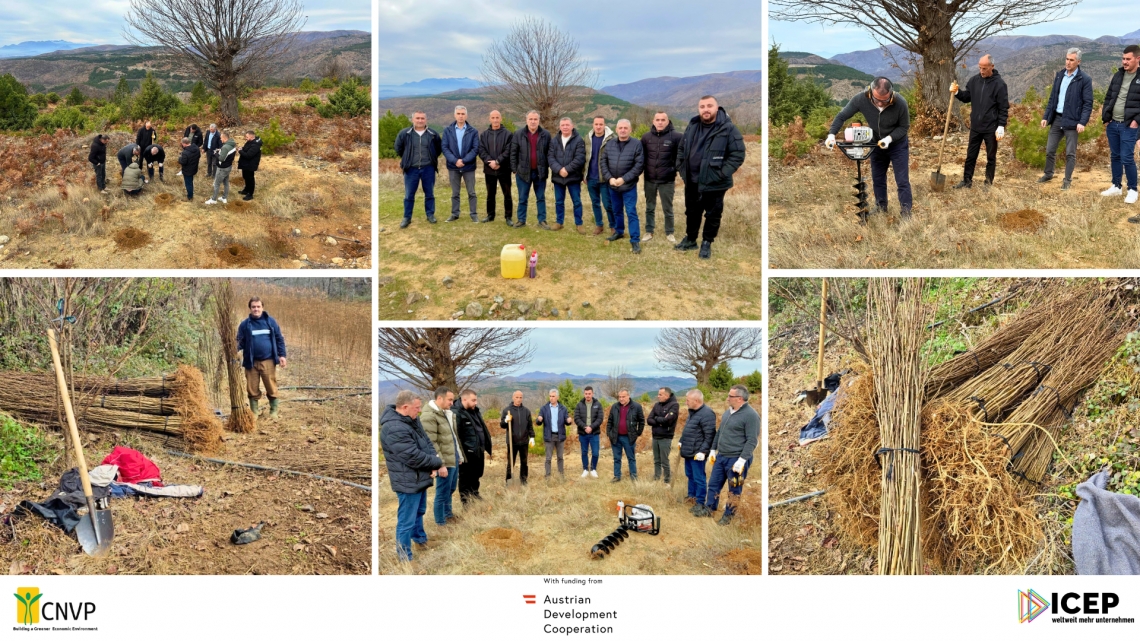
Ecosystems and biodiversity in the Drin River Basin continue to face serious pressure from soil erosion, deforestation, and decades of limited investment. Combined with low technical capacity at the local level, these challenges have led to widespread land degradation, with large amounts of fertile soil being washed into lakes and waterways.
Within the framework of the Integrated Forest Management along the Drin River Basin (IFM) project, practical measures are being implemented to address these risks. A key focus is the stabilization of eroded land through afforestation and improved land-use practices in smaller water catchments, which play an important role in controlling sediment loads and regulating water flows.
As part of these efforts, acacia seedlings are being planted in degraded areas. Acacia is a fast-growing species well suited to erosion-prone terrain, requiring minimal soil conditions and adapting well to cracks created by erosion. Its root system helps stabilize the soil, reducing further land degradation.
To make the planting process more efficient and reduce physical strain on workers, a gasoline-powered drill for opening planting holes was introduced, together with appropriate protective equipment. Before field use, workers participated in a short on-the-job training session, where they received practical guidance on safe operation, basic maintenance, and proper handling of the equipment.
These afforestation and erosion control measures contribute directly to ecological sustainability and climate change mitigation. By reducing soil erosion, improving vegetation cover, and enhancing biodiversity, the activities also support carbon sequestration and biomass production. In the long term, improved soil stability will contribute to better water quality downstream and more resilient ecosystems across the Drin River Basin.
The IFM project is funded by the Austrian Development Cooperation, implemented by CNVP Albania, and initiated by ICEP – Association for Global Development.