
News
Introducing the 4 Returns Framework in Albania: A New Approach for Nature and Communities
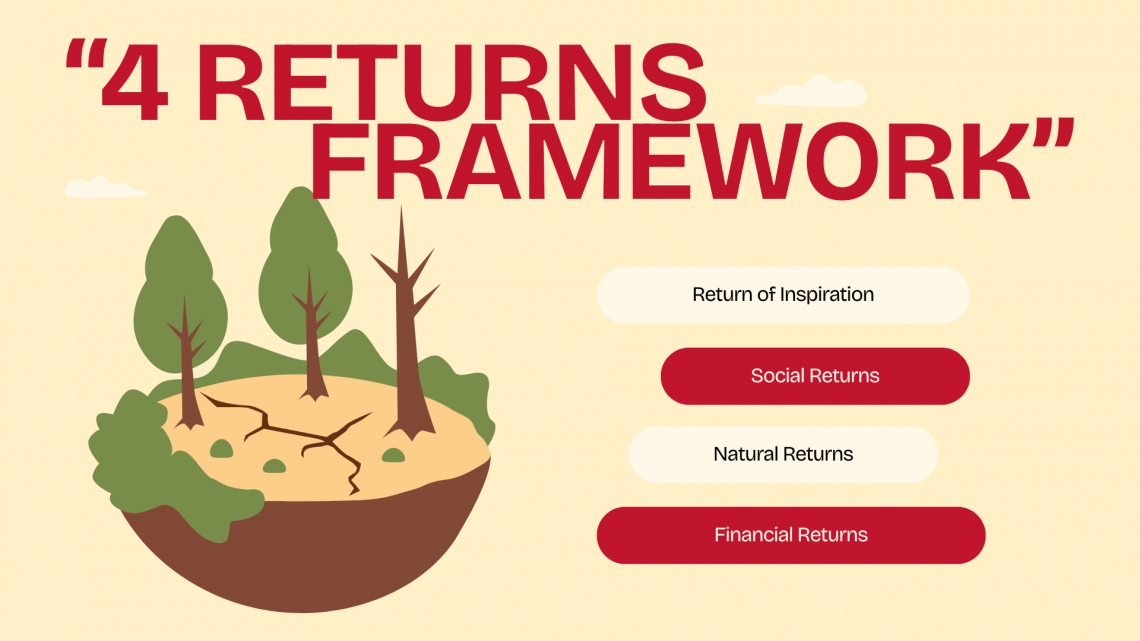
Protecting nature and supporting local livelihoods are often treated as separate goals. In reality, they are deeply connected. Healthy ecosystems support stable communities, and strong communities are essential for protecting nature. Recognizing this connection, the CNVP Foundation is introducing the 4 Returns Framework in Albania for the first time through the PULSE – Protecting Unique Landscapes and Species project, funded by Prespa Ohrid Nature Trust (PONT).
This approach offers a structured way to restore landscapes while creating social and economic opportunities for the people who live and work in them. By applying this framework, CNVP aims to support long-term conservation efforts that benefit both biodiversity and local communities.
A Landscape Approach to Restoration
The 4 Returns Framework was developed by Commonland as a practical model for large-scale landscape restoration. Instead of focusing only on environmental protection, the framework promotes a broader vision where ecological restoration goes hand in hand with social and economic development.
Landscape restoration is a long-term process. Forests, soils, water systems and biodiversity take years to recover, and communities need time to develop sustainable economic alternatives. For this reason, the framework encourages a long-term vision—often looking at landscape transformation over a period of twenty years or more.
The approach is based on the idea that real change happens when four types of “returns” are achieved simultaneously: inspiration, social benefits, natural restoration and financial value.
Return of Inspiration
The first return focuses on people. In many rural areas where ecosystems have been degraded, communities often lose confidence in the future of their land and their livelihoods. Restoring landscapes therefore begins with restoring inspiration.
Through dialogue, participation and local engagement, communities are encouraged to imagine a positive future for their landscapes. When people see opportunities emerging from sustainable land use and conservation, they become active partners in protecting natural resources.
For projects like PULSE, this means working closely with local organizations, institutions and communities to build shared ownership of conservation efforts.
Social Return
The second return focuses on strengthening communities and improving social well-being. Landscape restoration should generate benefits that improve the quality of life for local people.
These benefits may include new employment opportunities, stronger cooperation between institutions and communities, and improved local capacities for managing natural resources. Social return also includes empowering local actors such as farmers, community organizations and women’s groups, to play an active role in local development.
For CNVP, community engagement has always been central to its work. The 4 Returns approach reinforces this principle by ensuring that conservation efforts directly support rural livelihoods and social resilience.
Natural Return
The third return addresses the recovery of ecosystems and biodiversity. Healthy landscapes provide essential services such as clean water, fertile soil, stable climates and habitats for wildlife.
Natural return includes activities such as restoring degraded land, protecting forests, improving soil management, conserving biodiversity and supporting sustainable agricultural practices.
Within the PULSE project, this return is closely linked to the protection of ecologically important landscapes and species. Strengthening conservation measures while supporting sustainable use of natural resources will contribute to healthier ecosystems across project areas.
Financial Return
The fourth return ensures that restoration efforts generate sustainable economic value. Without viable economic opportunities, conservation initiatives often struggle to last.
Financial return focuses on developing nature-based economic activities that generate income while maintaining ecological balance. These may include sustainable agriculture, responsible tourism, forest products or value chains linked to natural resources.
By encouraging sustainable business models and local entrepreneurship, restoration becomes economically viable for communities. When nature creates income opportunities, protecting it becomes a shared interest.
Applying the 4 Returns Approach in Albania
Through the PULSE project, CNVP is exploring how the 4 Returns Framework can guide conservation and development efforts in Albania’s landscapes. The approach will help connect biodiversity protection with community well-being and sustainable economic opportunities.
Rather than implementing isolated interventions, the framework encourages a holistic perspective. Conservation activities, livelihood development and community engagement become part of a broader landscape vision.
This approach aligns closely with CNVP’s mission of supporting nature conservation while strengthening rural economies. By integrating ecological, social and economic perspectives, the organization aims to contribute to resilient landscapes where both people and nature can thrive.
Looking Forward
Introducing the 4 Returns Framework marks an important step toward more integrated landscape management in Albania. By combining inspiration, social development, ecosystem restoration and sustainable economic activities, the approach offers a pathway toward lasting change.
As the PULSE project progresses, CNVP will work with communities, institutions and partners to explore how this framework can support practical solutions for conservation and rural development.
Ultimately, restoring landscapes is not only about protecting nature. It is about creating environments where ecosystems recover, communities prosper and future generations can continue to benefit from the natural resources that sustain them.