
News
GBE Herbs: A Success Story Of Tea Production
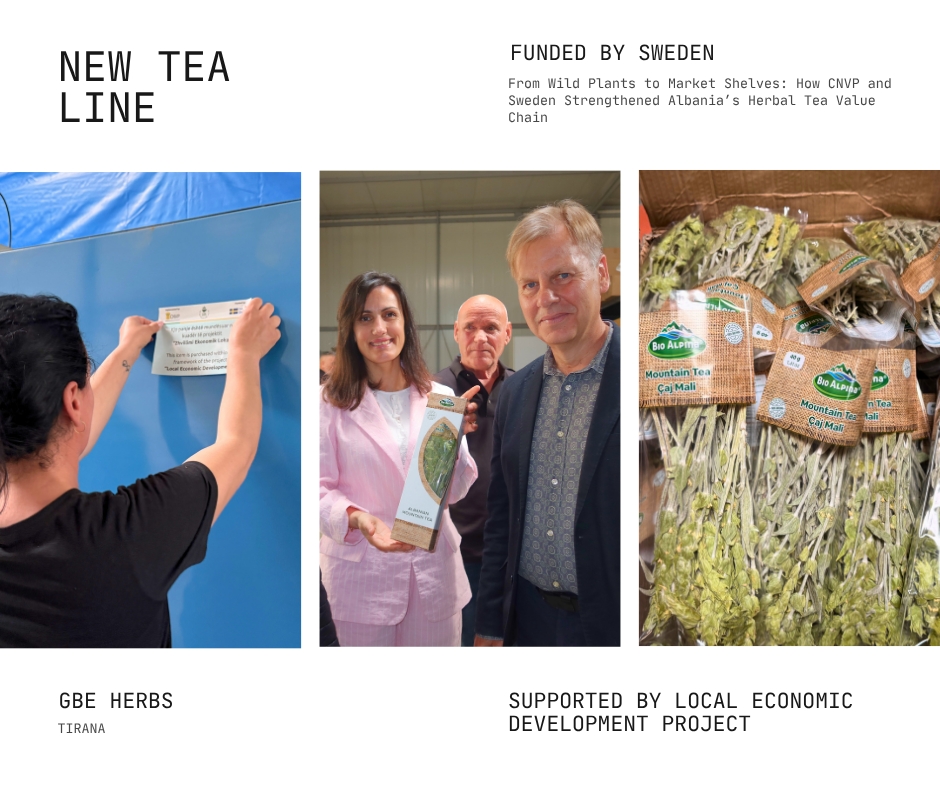
Albania is among the largest exporters of raw Medicinal and Aromatic Plants (MAPs) in the region, yet only a small share of this natural wealth is processed domestically into finished products such as herbal teas and other value‑added sub‑products. This gap between raw material export and local processing represents both a challenge and an opportunity for rural livelihoods and the green economy.
To address this, CNVP Albania, through the Local Economic Development project funded by the Government of Sweden, partnered with a Tirana based herbal tea producer, GBE Herbs, to strengthen local processing capacity and create stronger market links for MAP collectors across the country.
With CNVP’s support, GBE Herbs installed a new machinery line dedicated to the cleaning, separation, drying, and packaging of natural herbal teas. This investment has already increased production capacity, improved product quality, and enabled more professional packaging that meets market standards.
The impact of this support goes far beyond the company itself. Hundreds of families across Albania who collect MAPs from nature now benefit from more stable demand, a reliable buyer, and better income opportunities connected directly to sustainable, nature‑based livelihoods.
This development also demonstrates how targeted investment in local value chains can reduce reliance on raw material exports while encouraging domestic processing, job creation, and green economic growth.
CNVP Albania and representatives of the Embassy of Sweden in Tirana recently visited the GBE Herbs facility to see firsthand how this support is translating into practical results on the ground — where improved machinery, increased production, and better packaging are directly linked to rural incomes and environmental sustainability.
“Through this support, we are not only improving our production line but also strengthening our connection with collectors across Albania,” said the owner of GBE Herbs. “This investment allows us to work more efficiently and deliver higher quality products to the market.”
This example shows how strengthening one local processor can create a ripple effect across the entire MAPs value chain, from collectors in rural areas to finished products reaching consumers.